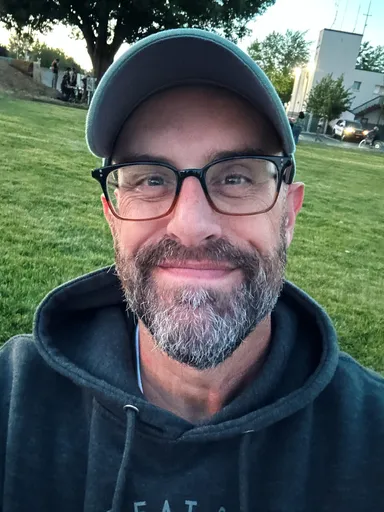
An update, and hi!

Once upon a time I kept a blog. I wrote not weekly, not daily, but three, four times a day. I wrote about almost anything that occurred to me — anything from what I thought about a movie I’d just seen to various writing experiments. I don’t do that any more. It’s exhausting, and I would rather post the occasional update here and keep my focus on the books. (Nobody’s complaining about my not blogging, for the record.)

But: I do stay fairly active online, chatting with readers and new people I meet all the time. Here’s where you can find me most often:

  • Twitter. I’m @jgurley! Come say hi.
  • Facebook. I keep my personal page private, but I’ve started an author page. Like it if you want to get updates!
  • Google+. I’m slowly resurrecting this, as I haven’t really used it in more than a year. If you’re there, add me!

There are a dozen other places that I could be active, but I find that three is enough.

Now: an update on the book!

Greatfall has been doing very well, and readers have been extremely kind with their reviews, and I appreciate every single person who has bought a copy. You are all my best friends now. Thank you!

Some of you are anxiously waiting for the final installment, Part 3. It’s very nearly done, and it’s the longest installment yet. (Part 1 was about 17,000 words. Part 2 was about 22,000. For comparison, Part 3 is currently 28,500 words and still not finished.) It’s going to be a nice, meaty conclusion to the story, and I hope you all like it.

BookCover_OmnibusA few people have asked if I plan to collect the installments into a single volume. I’m giving this some thought, but it seems likely. (Hell, I’ve already designed a cover for it. I like it too much not to publish the collected volume.) I’m also planning to include a little bonus story in that volume. That bonus is just that — it’s not essential to the story, but I suspect some of you may find it very, very satisfying to read.

I’ve got a few thousand words left to write in Part 3, and then I’ll be publishing it shortly after. It’s probably fair to say that it’ll be out in the next 7-10 days. (And if it’s not, I expect you to beat down my door and find out why.)

Now, come find me online and say hi!

Eleanor and the story that never ends

If my characters aged as I wrote my books, then Eleanor would be twenty-six now.

That’s a bit of a mind-splosion for me. Though probably not for most of you, who have no idea what I’m talking about. So let me back up a little bit. There’s a lot of story to retrace.

In 2001, I started writing a new novel. I called it Eleanor, tentatively, because that was the protagonist’s name, and I figured I would come up with a new title when I figured out where the story was going. That’s something I was comfortable with at the time — not knowing where a story might lead — and in retrospect, it generally had more to do with my immaturity as a writer. I was twenty-three.

But Eleanor was a little different. I didn’t know where the novel was going because the novel was… my story. Sort of. More specifically, the novel became the tool I used to process some complicated thoughts I was having at that age.

I’d grown up in a Christian home, one in which my father was (and he still is) a pastor and minister. I was part of a larger family that had deep southern Christian roots. There were multiple preachers in the family. I was singing Bible-themed songs from the time I learned to talk. My grandmother has a rather adorable audio recording that she made when I was five years old — on it, I’m singing songs about King David running through enemy troops, and leaping over walls like Superman. (My little sister mumble-sang in the background, still figuring out what words were.)

At twenty-three, things had begun to change for me. My life didn’t make much sense to me anymore. I was firmly entrenched in the Christian life — I was a board member on the incorporation papers for the little church I attended; I was married to a Pentecostal girl; I was a Bible college dropout. I played the drums during worship services, I had taught Sunday School classes. I had even preached once or twice myself.

The problem was, I didn’t really believe any of the things that I was immersed in anymore. I’d been poking at my “faith” for years by then, and was only beginning to build enough courage to confront what I was afraid of admitting: I didn’t share my family’s belief in god. I wasn’t quite comfortable coming clean about this yet, so I did two things:

  • I stopped attending church, figuring that if I stuck it out, I would irreparably damage my ability to believe in something I’d poked so many holes in;
  • I started writing Eleanor.

It became very clear to me early on that Eleanor wasn’t just a novel about a girl who had a terrible accident, fell into a coma, heard the voice of god (presumably), and spent the rest of her life trying to find that god in the real world. I mean, it was all of those things, but it was also a way to explore my own questions about the existence of god, the pros and cons of religion, and other complicated things. This isn’t a new thing. Countless writers use their books as a form of coping therapy or catharsis. I was doing this, too.

But those are big questions I was trying to answer, and I found it difficult to write Eleanor‘s ending without finding answers for myself. The book had become so connected to my own personal fact-finding mission that I had a hard time drawing a line between it and myself.

And so the novel grew, and grew, and grew.

Prior to writing Eleanor, I had already finished three novels. I was young, and the novels aren’t great, and I’ll never publish them. But I wrote them, and I finished them quickly. My first novel took just three months. My second, about six. My third, close to a year.

It’s 2013 now, twelve years after I began writing Eleanor.

That book still isn’t finished.

2012-04-16A lot has changed in the years since I began writing it, though. The story ballooned, then shrank; it ballooned again, and then its voice changed. Through all of this, I would rewrite the story. Between all of the drafts and sketches and vignettes and short stories tied to this manuscript, I’ve probably written close to half a million words. And while all of that was happening, I was discovering things like Carl Sagan’s bibliography, and listening to Ann Druyan on Radiolab, and reading everything I could find by Richard Dawkins and Christopher Hitchens. I was exploring more deeply a fascination with science and logic, one that I’d had since childhood, but that had been forced to cohabitate with incompatible religious beliefs. I haven’t been back to church since I left, twelve long years ago. Along the way, I even turned Eleanor into a graphic novel, and that experiment lies dormant, though it was a wonderful thing to share the story with readers (finally!).

Something changed during all of those years. Without my really noticing, Eleanor stopped shouldering the burden of being my vehicle of exploration. I didn’t need the book to figure out what I did or didn’t believe anymore. I’d sort of come to a reasonable conclusion about those things on my own.

You’d probably expect the book to become less relevant, then. After all, if it existed primarily for the purpose of solving the mysteries of the universe, and I had come to my own conclusions about those mysteries outside of the book, then hadn’t it served its purpose? And I wondered about that, too.

But the answer is no. Eleanor’s story still completely fascinates me, and in the past year, as I’ve thought about it more and more, I’ve discovered that there’s a bigger story here. One that I haven’t fully explored in the primary narrative, but that has been lurking around the edges for years and years. It’s peeked through in character sketches and vignettes that I’ve written, these little experiments that had no bearing on the main story, but that allowed me to throw the character into unusual situations and write about her just to get to know her better. There were moments where I wrote vivid, almost paranormal dreams, just to find Eleanor’s voice. I wrote scenes of Eleanor wandering through empty cities. Scenes where she sleeps while her lover sneaks around behind her back. Scenes where her recurring dream begins to blur into her mother’s recurring dreamspace

And it’s incredibly clear to me that not only is there still a story here, but it’s a bigger and more wonderful one than ever existed before. Eleanor’s story is probably still my epic, the one that’s taken years to rise in the oven, and still isn’t finished.

I’m writing the final installment of Greatfall, the fan-fiction novel based on Hugh Howey’s Wool universe. When I’m done, I’m returning to my Movement Trilogy to write the final volume, The Travelers.

But after that…

After that I’m returning to Eleanor. And I’m going to genre-fy her story. Because there’s a powerful story here, and a strong and determined teenage girl, and a hint of mythology that bleeds into the real world, and a dark world that lies beneath the one we all know — or perhaps the one we know lies beneath it. And that story has nothing to do, anymore, with my own search for truth. Now it can be what it always should have been: Eleanor’s search for truth.

After more than a decade, I think I may have a plan for finally giving this character her long-overdue, much-deserved day in the sun.

Even if it is a dying sun.

An excerpt from Part 3 of Greatfall

My vacation in Hugh Howey’s silos has nearly come to an end! Parts 1 and 2 of Greatfall have been published, and the final installment is all that remains. (Speaking of Part 2, it’s free on Amazon right now — go grab it!)

Part 3 has some rather large responsibilities to fulfill, some enormous questions to answer. I’m not going to go into them here, since Part 2 revealed some pretty spoilery things. If you’ve read Part 2, then you know that shit is really starting to get real in Silo 23.

Here’s an excerpt from the beginning of Part 3, which picks up right where Part 2 left off.

BookCover_Part3

PART THREE

The Insubordinate

He dreams of blood. 

In the uncomfortably large bed that has only recently been abandoned by the Wise Father, Isaac sleeps restlessly. The bed is so soft that it seems it will swallow him whole, something that his mind seems constantly aware of as he sleeps. And so he struggles, and in his dream, he struggles as well.

His arms are held tightly at his sides, one side gripped by Matthew’s slight but fiercely strong hand, the other side held by the Wise Father himself. The two men smile deviously at Isaac, and he looks back and forth between them, terrified by their curling grins.

He cannot speak. His mouth will not open.

He stands there, pinned between the two older men, and watches as the guards of the court escort the seeker to the railing’s edge. The seeker is Jennifer Lorraine Hughes, the perky, overachieving girl who stood before Isaac in court.

Isaac tries to shout, to warn the guards away, to apologize to the girl, but his words die as unintelligible grunts, forever locked inside his chest, unable to escape through his lips. He tries to free himself, letting his body sag between the two men, then summoning every bit of his strength to wrench himself from their grasp.

But the Wise Father holds on doggedly, and Matthew, for his part, digs the tips of his fingers into the soft pit of Isaac’s inner elbow. Matthew leans down, placing his mouth so closely to Isaac’s ear that the boy can feel Matthew’s dry lips on his skin.

“The One True knows your secret,” Matthew whispers. “He knows that deep inside you want to know this power.”

Isaac falls slack in their grips, and shame settles over him like a red cloak.

He watches the guards walk the girl to the edge. Listens to the girl — proud and chipper until the end — say, “To the honor of the One True, I submit my body.” Watches the girl’s chest rise and fall with each patient breath, her eyes shine with the light of her sacrifice. Hears the court director proclaim Greatfall, and watches, in horrid magnification and slow motion, as each knuckle of each guard’s hand flexes and opens.

Jennifer Lorraine Hughes drops out of sight as if she had never been there, and to her credit, does not scream. Isaac struggles again, and then somehow he is on the bottom floor of the silo, alone, his elbows and upper arms throbbing cold in the absence of his captors.

It takes him a moment to realize where he is, and he looks up just in time to see Jennifer Lorraine Hughes fall out of the dark chasm above. She never screams, but Isaac sees the most awful resignation in her eyes before she hits the floor, and his body freezes, unable to look away.

She practically explodes, her body nothing more than a fragile sack for all of the blood inside of her. Ninety pounds of blood, ninety pounds of blood under a thin skin that only looked like it could think, only looked like it could feel and talk and dance and laugh.

The blood fountains in all directions, washing the brown floor in gouts of red, and Isaac, near the wall, throws up his arms and tries again to turn away. But the blood covers him, almost hot, and Isaac falls in it, falls, and then he is falling through the shaft himself, the Path so close that he can’t believe he — oh shit, oh god, oh shit, he’s going to hit the railing, it’s going to cut him in half, he doesn’t want to die, he doesn’t believe, he doesn’t believe, he doesn’t believe –

“–honestly believe you were the first fucking Wise Father to try to sabotage the One True’s wishes?”

Isaac bolts upright in bed, and Matthew is there, in the dark of Isaac’s room, his face looming in the darkness. Isaac opens his mouth to scream, startled that his mouth will open at all, but Matthew claps his hand over the boy’s mouth before a sound escapes.

“There is one truth you will learn, child, and you will learn it goddamn good and fucking well,” Matthew says, his voice like a thin razor in the dark. He leans closer to Isaac’s face, his eyes flaring white and frighteningly wide. “When you don that robe, you are not the champion of these people. You are not a hero. You are not a revolutionary. When you wear the robes of the Father, you are a puppet, and nothing more. The One True’s hand goes right up your ass, through your guts and into your mouth, which he controls. When he tells you what to say, you say it. When he tells you what to do, you do it. Do you understand me?”

For the second time in Matthew’s presence, Isaac urinates on himself.

Matthew feels the rush of warmth, and looks down. He turns his terrifying gaze back to Isaac, who stares up at him, his own eyes filling with tears.

“I see you do understand,” Matthew says, almost jovially. “That’s good, Isaac. That’s very good. Tell me, now — do you remember your family?”

Isaac’s eyes fly wide, and he protests against Matthew’s palm.

“Oh, don’t worry,” Matthew says. “Your family is fine.”

Isaac relaxes visibly.

“They’re fine,” Matthew says. “For now. But one more stunt like that one today — one more judgment overthrown — and I’ll make you choose which parent you love the least, and I’ll make you push them over the railing yourself. Clear?”

The tears spill over Matthew’s hand, and Isaac realizes that his entire body is trembling.

He nods.

“Good,” Matthew says. “I’m going to let go now. No screaming.”

Isaac nods again.

Matthew removes his hand, and pats Isaac’s chest over the blankets.

“You know,” Matthew says, almost kindly, “every Wise Father wrestled with the things you wrestle with, Isaac. Yours is not an easy responsibility to bear, I’m afraid. But with time, you’ll understand the reasons for everything. There are reasons, you know.”

Isaac says nothing.

Matthew stands up, smoothing his robe. “Tomorrow we’ll resume your training. Don’t be late.”

Isaac watches as his assistant leaves the room, closing the door with a soft click.

Then Isaac leans across the bed and vomits onto the floor.

# # #

I’m excited to finish writing this final installment and wrap up the story of Silo 23. If you’d like to know when Part 3 is released, be sure to join my mailing list — I’ll alert you as soon as it’s available!

Well, this happened

jgrank

This has been one hell of an interesting month. Not too long ago I was posting about one of my first milestones as an indie author. Now, just a week or so later, the mild success of Greatfall has nudged me onto Amazon’s list of top 100 science fiction authors. I’m well aware that this is a temporary honor, and that tomorrow I’ll be #432 again, but for the moment, this feels very, very nice.

I love the serendipity of being pinned between two authors whose books I’ve always loved, but particularly Bradbury, whose The Martian Chronicles is not only one of my favorite books of all time, but which also deeply inspired my Movement Trilogy.

On another note, it felt very good to pass 1,000 books sold. Which means that it feels exponentially more gooder — yes, more gooder — to have passed 1,000 books sold this month. April has been the best month I’ve had in my short indie career — as of today, I’ve sold just under 1,200 books since April 1, and there are still a few days to go before May resets the clock.

To every single one of you who has purchased one of my books, I just want to say thank you. You’re making an unknown writer’s tiny little dream more of a reality every single day.

Part 2 of Greatfall is available

BookCover_Part2The second installment of Greatfall, the novel I’ve been writing in Hugh Howey’s Woolverse, became available on Amazon last night. In Part 2, the secrets of Silo 23 are revealed, and, as usual, things keep getting darker.

This new installment is 99 cents — you really can’t beat that!

Here’s the short description:

The dark nature of Silo 23 continues to reveal itself to Maya, who lies bleeding and starving in a cell on the uppermost floor, and to Isaac, the innocent boy selected to carry on the silo’s terrible legacy.

Told you it was short! There’s too much I can’t give away, plain and simple. If you read the first installment, or if you’re just a die-hard Wool fan who needs a good story while you wait for Hugh’s next book, then what are you waiting for?

Get your copy here!

Marking a milestone

I wrote my first novel in 1998, wrote two more by 2001, and then started writing Eleanor, my twelve-years-in-progress-and-still-unfinished epic. Along the way, I collected rejection letter after rejection letter. I got signed by an agent, and then got dropped. I tried turning Eleanor into a graphic novel, then put it on hold.

In December 2012, I took a shot at writing a novel for Amazon’s Breakthrough Novel competition. The result was The Man Who Ended the World. Impatient as I am, I decided to skip the contest and moved right into self-publishing, releasing the book on Amazon in January, 2013.

In February and March I released The Settlers and The Colonists, the first two entries in my science fiction trilogy. And this month I began serializing Greatfall, a novel set in Hugh Howey’s Woolverse.

Self-publishing has its naysayers, and one common argument is that indie authors usually sell no more than 57 books. In their entire careers. Curious, I did the math. How well have my books done?

Well, I missed celebrating the milestone when it actually happened, because I was busy writing or something. But here it is:

Since January, I’ve sold over 1,000 self-published books.

And I have a feeling things are only going to get better. What an exciting year this is going to be!

An excerpt from Part 2 of Greatfall

Part 1 of Greatfall has been out for about a week now. I’m excited to find out just how far down this rabbit hole the faithful Wool fans are willing to go, because as twisted as the first episode may have been, things are about to get a whole lot darker. (If you’ve already read the book, please take a moment to leave a review on Amazon — every little bit helps new readers find it.)

Part 2 is going to start answering some of the questions raised by the first installment, like: What the fuck is going on here? Who is the One True? What’s so special about Matthew and his family line? What is Ascension really about?

An excerpt from Part 2 follows, below the book cover.

BookCover_Part2

PART TWO

The Beach

The sky is blue.

It isn’t the blue that she’d heard the older generations describe wistfully. Maya has always imagined those blue skies as static, as fixed curtains of color that hung overhead, unchanging. This blue is a wash of pigment, so rich and close that she can almost touch it. Maya basks in it, turns her face up to behold it. She resists blinking, afraid it might vanish before her eyes if she does.

And the sun. Oh, the sun.

She’d heard those same Old Ones speak of the sun before, but she was born in the silo. A bright star in the sky, near enough to warm the world with its touch, they would say.

But she feels it now on her skin, lifting every tiny hair on her arms, enfolding her in its warm, comfortable embrace.

In the dim recesses of her mind, Maya quells the voice that tells her this isn’t real.

Instead, she cranes her neck, listening. There’s something else here. Something else that runs beneath this world like a current. She can’t place it, but her heart wants to sing at the sound.

She climbs the hill, expecting to see the pitted plains, silos tucked into every bowl of earth. But instead, there are trees. Acres and acres of them. She has never seen a tree, either — at least, not trees like these. She has seen tomato stalks under the grow lights. Broccoli bushels. The trees are almost like the broccoli, but different somehow. They tower over the land as far as she can see, their heavy branches waving about in the –

Wind.

She feels it surge up the land before her, the updraft breaking over her body like a –

Like a wave.

Maya whirls about, suspicious now of the sound she thought she heard, and –

“Ohhh,” she breathes.

She is standing on the crest of a hill that separates earth and sea. The ocean is a blue even more beautiful than the sky, its depth reflected on its surface as striations of brighter and darker blues and greens. The waves roll in patiently, their white noise carrying up to her like a love song. Beneath each bulging wave she can see churning, curling billows, and she wonders what might be even deeper still.

Maya’s heart swells at all of these new things.

And then she hears the voices.

• • •

She follows the sound, straining now to hear them clearly, until she pinpoints two men in crisp suits, strolling along the same crest she stands upon. They are far enough away that they haven’t yet seen her. Their ties flutter in the wind, and the wind carries their voices to Maya.

“…nonresponsive,” one of them is saying. “Talking to… some kind of nonsense. Delirious.”

“Give her another hour,” the other says. “Then… have to adjust the dosage. …need her awake.”

Maya feels the first flush of fear. Are they talking about her? Who are they?

One of the men pauses, and lifts a hand to shade his eyes.

Maya has the distinct impression that he is looking at her. She gasps, then scuttles down the ocean side of the hill, her bare feet sending landslides of warm sand ahead of her. Her heels dig in and find cool, damp hardpack, and the sensation lights up pleasure centers in her brain, even as she flees.

At the bottom of the hill, Maya finds a series of slopes and dunes. Sawgrass — another unfamiliar sight — waves in the ocean breeze. She can smell the salt water now, and hear the dim squawk of seagulls farther up the beach.

The mens’ voices are still there, closer and overhead. Maya slides into the shadow of a dune and flattens herself into the sand, feeling it spill over her fingers and arms.

“When will he be here?”

“He was scheduled to see her this morning,” says the second one. “In an hour. Clearly that’s not going to happen.”

“My apologies,” the first says.

“It’s not your fault. But she needs to be conscious — conscious enough, at least — by tomorrow. Understand?”

“Yes, sir.”

The voices pass above her, not thirty feet away, and then begin to recede, the words tangled and then snatched away by the hushed roar of the sea and the sound of the wind skipping across the sand. Maya counts to one hundred, and then, having heard nothing more, rolls out of the shade and into the sun again. She feels immediately better, and stretches her arms and legs wide. She closes her eyes, and her every sense brightens. She can hear every blade of grass as it bends against its neighbor. She smells the slight tang of blood. She can taste the sun on her tongue. It tastes like an orange, juicy and not the slightest bit tart.

Maya hears footsteps approaching, swishing in the loose sand, then tapping lightly on some other surface.

She wrinkles her nose, but doesn’t open her eyes. Something’s not –

“Hello,” says a voice, smaller than the previous ones. “Are you awake?”

The footsteps stop, and she hears the rustle of clothing as this new person squats down.

The smell of the ocean is metallic now. Its leisurely roar takes on a rhythmic pulse. The pink light on the other side of her eyelids sours into a dull red.

“Can you open your eyes?”

Maya shakes her head.

“Why not?”

I don’t want to, she starts to say, but her mouth tastes like plastic, and something is in the way, something where her tongue and teeth should be, something not right, something isn’t right –

• • •

Maya’s eyes fly open in a panic.

The ocean, the watercolor sky, the sun — gone.

She is overwhelmed by darkness, by deep shadows that resolve, too slowly, into the four dank concrete walls of her cell. Something is pressing against her tongue, and her gag reflex fires, and she strains and coughs and feels the frightening sensation of choking to death.

“Take it out,” the new voice says. “Take it out!”

She coughs, but her mouth and her throat, are blocked. A shadow blots out her light, and she vaguely identifies it as a person, and that person reaches for her face. A hand presses against her cheek, palm rough, skin cracked, and another hand grasps whatever has slipped into her throat and pulls, not kindly.

A crinkled tube comes snaking and twisting out of her throat, and Maya’s body arches up in response. She coughs violently as the tube escapes. She tries to turn her head. The vomit comes then, but she can’t turn over — something is holding her down, holding her flat — and then she is choking again, and the rough hand is back, fingers in her mouth, scraping the back of her throat, trying to clear her air passage. She fights for a breath, finds a tiny pocket in the chaos, then inhales her own stomach acid. Her body lifts up, and she gags forcefully, so hard she thinks that everything inside her body will soon be outside.

And then whatever has been holding her down is gone, and hands are turning her onto her side, and Maya spits and coughs and throws up some more, and tastes blood in the midst of it, and then blacks out.

• • •

When Maya wakes again, she can breathe.

Someone has propped her up against a stack of blankets, and there are no tubes in her mouth this time. Her throat feels as if it has been scaled with steel wool, and every breath is like hot needles spinning into her lungs. But she can breathe, painful as it may be.

She is alone long enough for her eyes to adjust to the darkness of the cell. Her brain is still foggy, and then she sees the cell door, and through it, the strange wall covered with little placards, and her memories return.

Maya looks down at her arms. There are straps holding her wrists and elbows to the table she has been placed on. The skin beneath the straps is bright red, rubbed raw from her struggling episode earlier. She’s dressed in a beige gown, and to her horror, there are enormous rust-colored stains all over it.

Blood.

So much blood.

And then she remembers, and looks down at her feet.

No.

At her foot.

Maya’s scream rattles from her burning throat, and becomes a horrible, plaintive wail. It echoes down the hallway and carries out into the open hole of the silo.

They say later that some heard it as deep as 21.

Maya cries and cries until she is exhausted. From the darkness, a strange man in a smock appears, and slaps her inner elbow. She can feel the bite of a needle, and then the blackness reclaims her.

Her last conscious thought is of the sun.

But where she sinks now, there is no light, no warmth.

Just cold, awful silence.

# # #

If you’d like to know when Part 2 is available, join my mailing list so you don’t miss out!

Part 1 of Greatfall is available

BookCover_Part1I’m happy to join the ranks of the other talented authors who have already begun exploring Hugh Howey’s universe of Wool. Today, the first installment of my silo novel, Greatfall, has gone on sale at Amazon. At 99 cents, it’s a steal.

Here’s the synopsis:

What happens when a silo goes dark — willingly? Maya has been sent to Silo 23 to investigate. Disconnected from the grid, the silo appears to be dead, rotted from the inside. What Maya finds is a silo that is anything but deceased.

Shut off from the outside world and other silos, Silo 23 has evolved into something unexpected, and something more fearsome than Maya could have anticipated.

If you’re a fan of Wool, I hope you’ll find yourself right at home in this dark corner of that world. I promise you a bloody, satisfying ride.

Grab your copy here!